October 21, 2007 marked the end of Dr. Sheikh Muszaphar Shukor’s historic stay aboard the International Space Station (ISS). After more than a week of conducting biomedical experiments, experiencing Ramadan in orbit, and observing Earth from space, it was time to return home. But what was meant to be a controlled descent turned into one of the most intense and dramatic moments of his career.
Farewell to the ISS
That morning, Sheikh Muszaphar bid farewell to the crew remaining aboard the ISS. Together with Russian cosmonauts Fyodor Yurchikhin and Oleg Kotov, he climbed into the Soyuz TMA-10 capsule. The cramped descent module, designed for survival rather than comfort, barely had enough room for three adults.
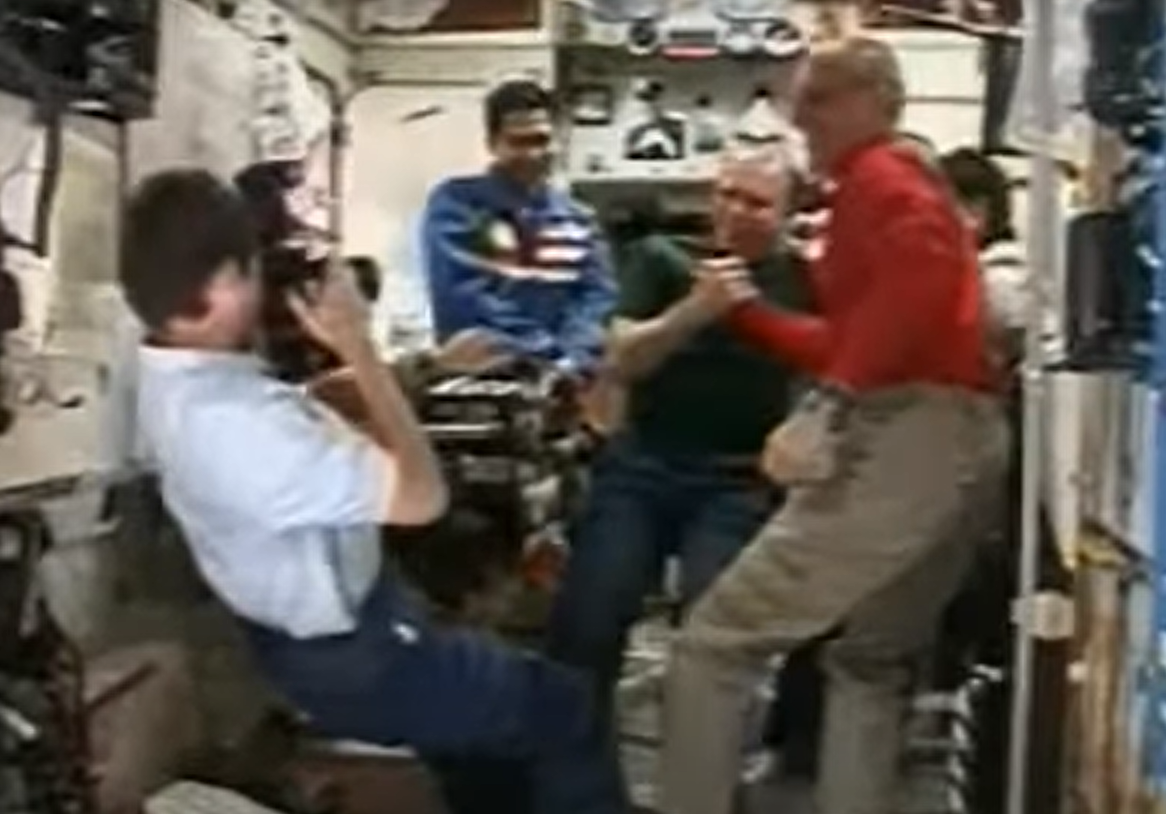
(Sheikh Muszaphar bids farewell to crew members before entering the Soyuz TMA-10 capsule. Source: AP Archive)
At 2:14 a.m. Moscow Time (3:14 p.m. Malaysian time), the Soyuz undocked from the aft port of the Zvezda service module. Three minutes later, the spacecraft performed a short separation burn to increase distance from the station.
At 4:47 a.m. Houston Time (10:47 a.m. Moscow Time), the Soyuz executed a four-minute deorbit burn, committing the crew to re-entry. Around 5:18 a.m. Houston Time (13:18 Moscow Time), the capsule’s computer unexpectedly switched to ballistic descent mode, initiating a steeper, faster re-entry.
An Unexpected Ballistic Re-entry
Instead of following the intended guided path, the capsule entered a ballistic trajectory. The steeper descent subjected the crew to G-forces as high as 8.5 G, compressing their bodies into the seats. Sheikh Muszaphar recalled:
“It felt like a big elephant on my chest. I just couldn’t breathe.”
Commander Yurchikhin added:
“The G-force was substantial, but none of the crew lost control. We constantly reported data until 7G, then focused on maintaining our ability to breathe. Everyone stayed alert until the end.”
The ballistic mode shortened the trip but punished the astronauts physically.
Touchdown in Kazakhstan
At 10:35:49 UTC (6:35 p.m. Malaysian Time), the Soyuz touched down safely on the windswept Kazakh steppe, about 340–370 km west of the planned landing site near Arkalyk.
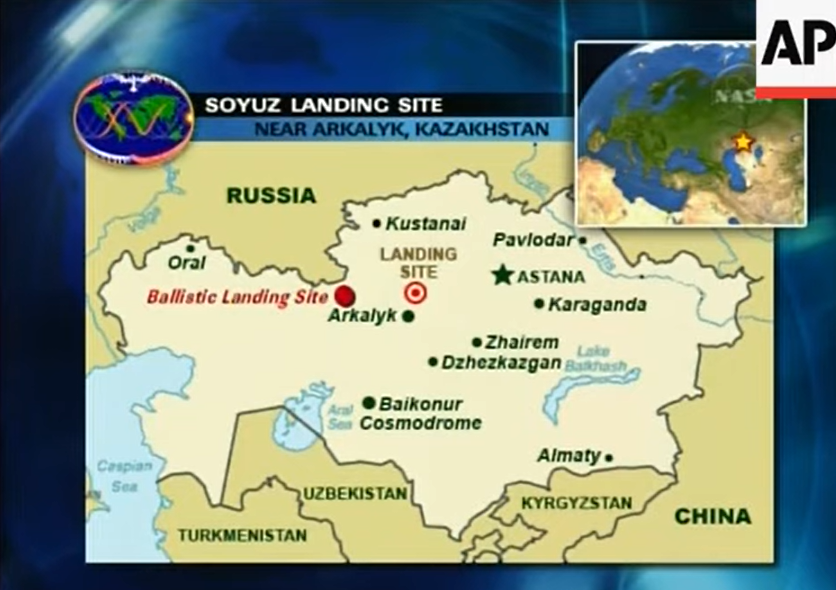
(Map showing the actual landing site and the ballistic landing site. Source: AP Archive)
Recovery teams quickly located the capsule, which bore scorch marks, damaged antennas, and a small grass fire caused by the soft-landing engines.
The crew was assisted out of the capsule, given warm blankets and hot tea, and examined by flight doctors. Despite the violent landing and high G-forces, all three crew members were in good health.
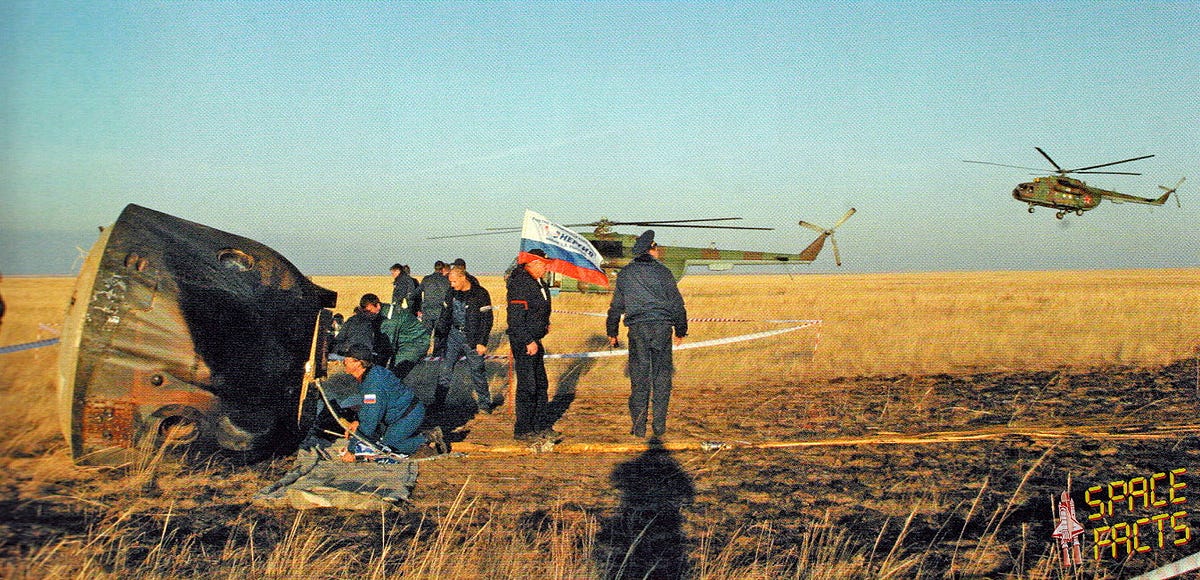
(Soyuz TMA-10 recovery. Source: Spacefacts)
After about two hours of post-landing rest, Dr. Sheikh Muszaphar and the cosmonauts boarded a Russian military transport plane for Kustanai, and then onward to Star City, arriving at the Chkalovsky airfield near the Gagarin Cosmonaut Training Centre around midnight Malaysian time.
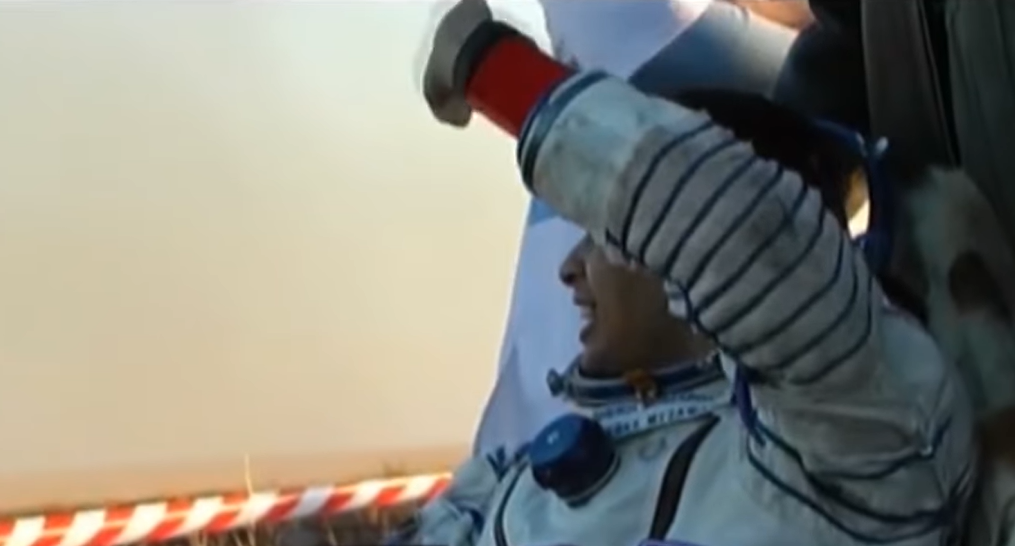
(Dr. Sheikh Muszaphar waving after a successful landing. Source: YouTube, Sheikh Muszaphar)
Political and Ceremonial Highlights
While the landing in Kazakhstan was tense, the events in Moscow were ceremonial. Deputy Prime Minister Datuk Seri Najib Razak, accompanied by Science, Technology, and Innovation Minister Datuk Seri Dr. Jamaluddin Jarjis, witnessed the landing from the Mission Control Centre. Following tradition, Najib affixed the Angkasawan mission logo on the wall of Malaysia’s technical control centre room ; a symbolic gesture marking the mission’s success.
Why the Descent Went Ballistic
Investigations revealed that one of the five pyro-bolts meant to separate the Soyuz service module failed to fire, causing the capsule to enter the atmosphere at the wrong angle and triggering the ballistic descent. Similar incidents had occurred on previous Soyuz missions, including TMA-1 in 2003.
The Star City Press Conference
On October 23, 2007, the international crew held a press conference at Star City. Yurchikhin highlighted the professionalism of the crew under extreme G-forces, while Dr. Sheikh Muszaphar emphasized his role as a Muslim astronaut:
“As a Muslim in space I did do my responsibilities in space, as in fasting and also prayers in space”
“And I do hope to be an example to other Muslim people around the world. I hope other Muslims will be united and stay away from war, and will be more peaceful.”
Dr Sheikh Muszaphar’s remarks underscored both technical resilience and cultural representation, marking him as Malaysia’s first astronaut and the first Muslim to openly discuss religious duties in orbit.
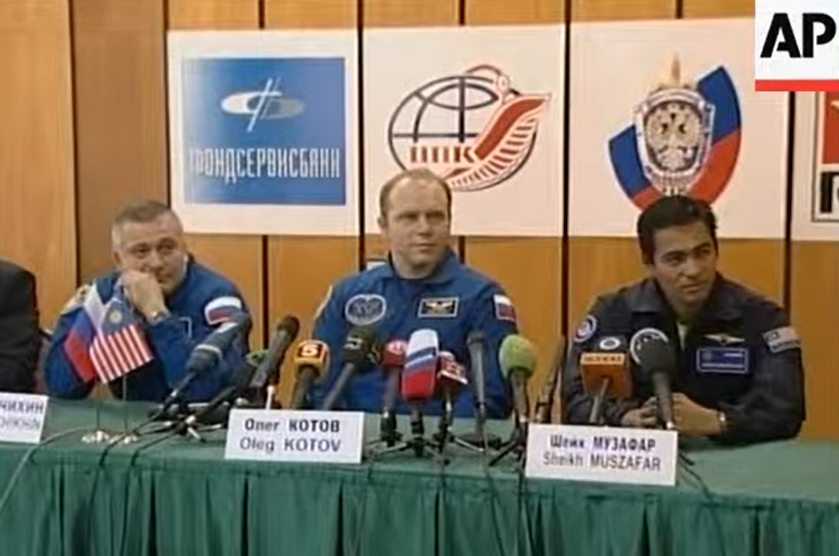
(Star City Press Conference. Source: AP Archive)
Triumphant Return to Malaysia
When Dr. Sheikh Muszaphar finally returned to Kuala Lumpur International Airport (KLIA), he was greeted like a national hero. Students, families, teachers, and officials gathered to welcome the country’s first astronaut. Media coverage and government statements celebrated his mission as a milestone in Malaysia’s scientific history. He reflected on the emotional highlight:
“I got a chance to see Malaysia from space, and it was the most beautiful thing I’ve ever seen.”
A Symbol Beyond the Mission
Dr. Sheikh Muszaphar’s journey was more than a personal achievement. It symbolized Malaysia’s arrival on the global space stage, inspired a generation to pursue STEM, and elevated Program Angkasawan Negara as one of the country’s iconic scientific accomplishments. In the months following, Dr. Sheikh Muszaphar toured schools, universities, and public events, sharing his experience and encouraging young Malaysians to dream big.
From the ISS to a ballistic return, from Star City to the arms of a proud nation, Dr. Sheikh Muszaphar’s story became an enduring chapter in Malaysia’s modern history.