Remember the song we always sang during motivation programs or seminars? The one that goes:
“Gemuruh Jiwa!! Semangat Membara!! Dari Puncak ingin ke angkasa”
Yes, Gemuruh Jiwa by Faizal Tahir. It was such a catchy, uplifting song that always got us waving our hands while singing passionately. Honestly, it’s the best motivation song ever created, no doubt about it.
That being said, I was always more intrigued by the lyrics and the background video used with the song. It talked about angkasa (space), showing photos of astronauts in full spacesuits, ready for launch, and videos of them floating around the space station. Little did I know back then, the man in those videos was Dr. Sheikh Muszaphar, Malaysia’s very first astronaut! We actually have an astronaut?!
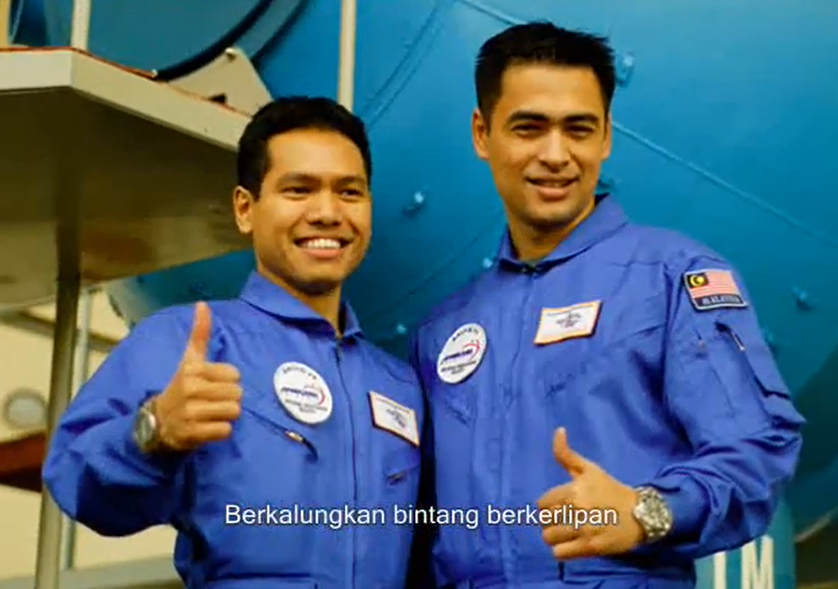
(source: Youtube, AZNALISA BINTI YAACOB)
Since then, I’ve always dreamed of becoming an astronaut myself. I still remember that Upin & Ipin episode where Upin wanted to be an astronaut and Ipin was handling the rocket - it boosted my passion even more. It has become my dream for a Malaysian to once again step into the cosmos.

(Source: Les' Copaque Production)
But all this got me thinking: why did Malaysia suddenly decide to send one of our own into space? What’s the story and history behind it?
Because of this, I spent months researching, and Alhamdulillah, it’s finally ready to be shared with you. Let’s explore it together!
The Origins of the program
The idea of sending a Malaysian into space wasn’t born in isolation. It was tied directly to Malaysia’s larger ambitions in science, technology, and international relations , and more specifically, to a billion-dollar deal with Russia.
On 20 May 2003, Malaysia confirmed it would purchase 18 Russian-made Sukhoi Su-30MKM fighter jets for the Royal Malaysian Air Force (RMAF) in a package worth US$900 million (RM3.4 billion). Then, Defence Minister Datuk Seri Najib Razak revealed that the deal wasn’t just about jets , it also came with offset packages, covering things like technology transfer, service support, and even potential co-operation in space technology.
In fact, Russia’s Foreign Minister at the time, Sergey Ivanov, explicitly said the Sukhoi purchase wasn’t only a defence upgrade but also a “long-term partnership” between the two nations that would include areas like research, development, and space collaboration. He even linked it back to Mahathir’s earlier visit to Moscow, highlighting that this was about more than just planes, it was about opening the door for bigger ambitions.
Just a few months later, on 5 August 2003, Malaysia formally sealed the Sukhoi agreement in Moscow during Mahathir’s visit. As part of the finalized reciprocal package, Russia promised to:
- Train and send a Malaysian astronaut to space.
- Provide US$270 million (RM1.03 billion) worth of technology transfer.
- Establish a Sukhoi service centre in Malaysia and supply components.
- Purchase over RM1 billion worth of Malaysian palm oil.
Just two days later, on August 7, 2003, Dr. Mahathir officially announced the Angkasawan program, officially known as Program Angkasawan Negara (PAN). The name Angkasawan, derived from the Malay word for astronaut, symbolized a bold new chapter in the nation’s history.
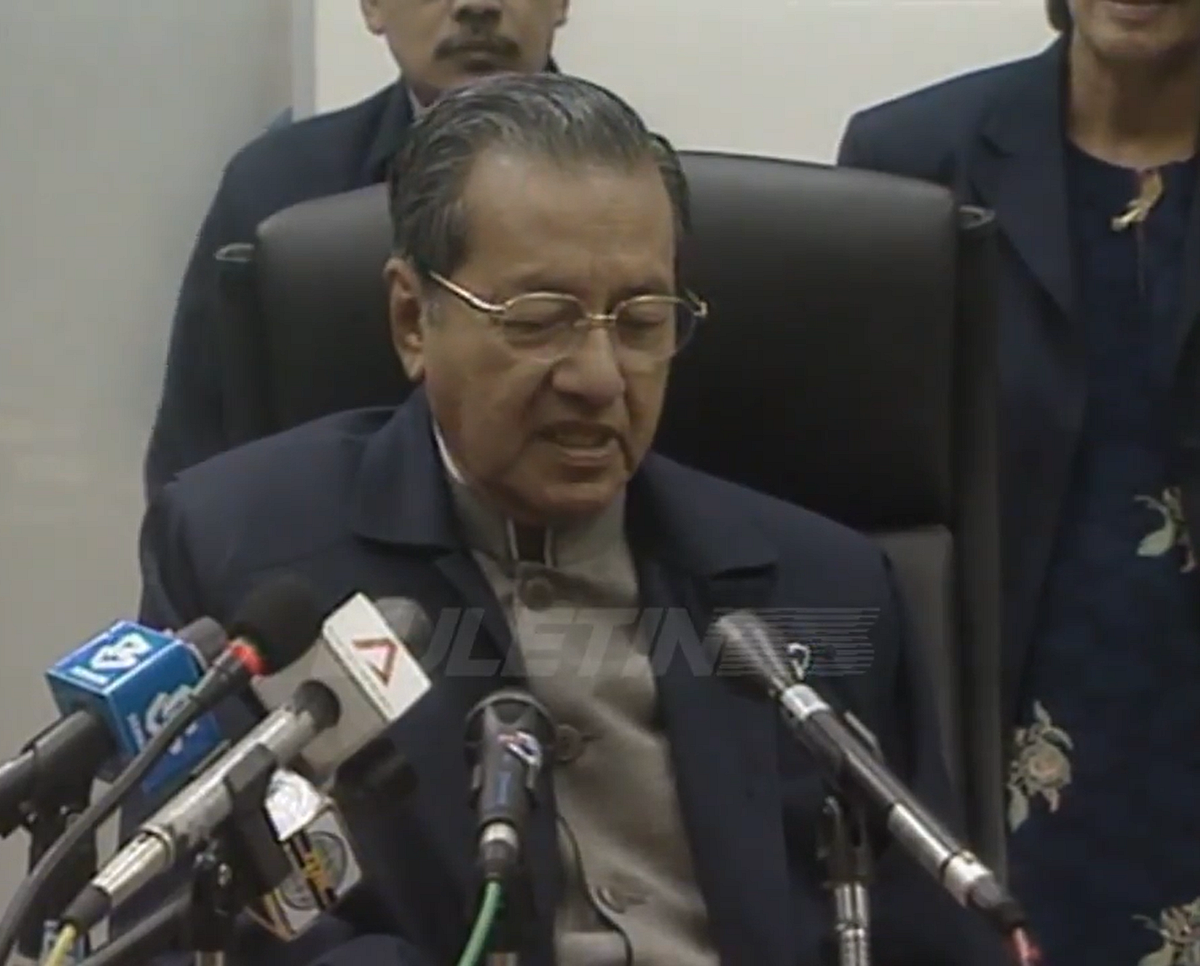
(Dr. Mahathir announcing the program. Source: TV3)
The announcement came during his visit to the team behind RazakSAT, Malaysia’s second micro-satellite, at Astronautic Technology (M) Sdn. Bhd. in Technology Park Malaysia, Kuala Lumpur.
There, Dr. Mahathir revealed that two or three Malaysians would be sent to Russia for astronaut training, preparing for a joint space research mission with Russian cosmonauts.
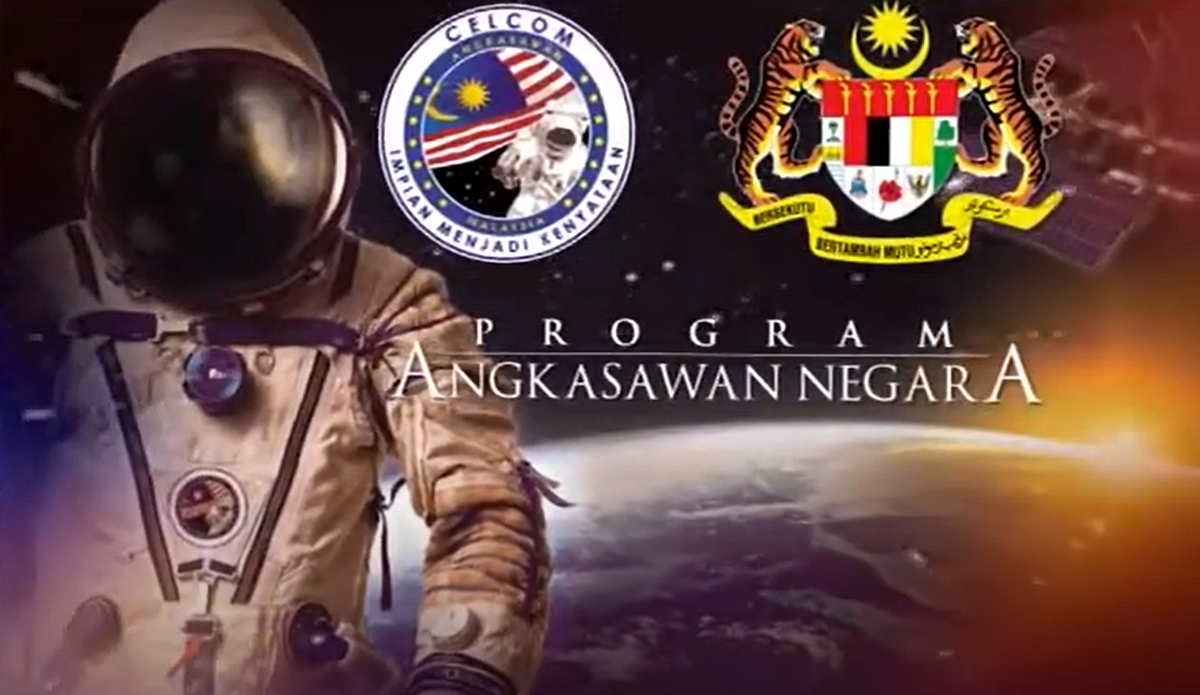
(Poster for Program Angkasawan Negara. Source: MOSTI)
Malaysia’s Space Ambition
For Malaysia, still a developing country at the time, this was about far more than prestige. It was about showing progress and positioning the nation on the global stage. The government made its intentions clear:
- Strengthening international ties: especially with Russia, a long-standing space power.
- Advancing science and technology: leveraging the program to boost local research and industries.
- Inspiring a generation: encouraging Malaysians, especially youth, to pursue careers in science, technology, engineering, and mathematics (STEM).
- National pride: joining the small group of nations with human spaceflight capabilities.
As Dr. Mahathir put it, it was part of Malaysia’s long-term vision to embrace science and innovation as a core of national development.
PAN, managed by the newly formed National Space Agency (NSA, later known as ANGKASA), set some bold guidelines. It would be open to all Malaysians - regardless of race, profession, or gender. Academic qualifications weren’t the main filter; instead, they wanted physically and mentally fit candidates who could represent the diversity of Malaysia.
From the get-go, the plan was ambitious: only two Malaysians would be chosen to train at Russia’s legendary Star City, side by side with other international astronauts, going through at least 18 months of rigorous preparation. The hope? That this “first mission” would spark a future generation of Malaysian spacefarers.
Timeline of the Early Days
The Angkasawan program quickly moved from idea to reality:
- 5 Aug 2003 : Malaysia announces Sukhoi purchase; Russia agrees to train a Malaysian astronaut.
- 7 Aug 2003 : Tun Dr. Mahathir officially launches Program Angkasawan Negara.
- 13 Oct 2003: The government opens applications for all Malaysians to apply as astronaut candidates.
- 31 Dec 2003 : Over 11,000 Malaysians submit applications via the official website.
- 26 Mar 2004 : Program delayed to 2007, partly due to the Columbia Shuttle disaster and scheduling with the International Space Station.
Even before any selection had taken place, the program had already captured the imagination of the nation.
A Bold First Step
The Angkasawan program began not just as a by-product of a defense deal, but as a carefully framed vision of national progress. It symbolized Malaysia’s determination to embrace science, technology, and space exploration as part of its future identity.
Of course, not everyone was convinced at the time. Some saw it as an expensive luxury or a “vanity project.” But for many others, it was proof that Malaysia could dream big, and act on those dreams.
This was just the beginning. In the next part of this series, we’ll dive into how the program unfolded, and the massive challenge of selecting who would carry Malaysia’s flag into space.