Malaysia’s search for its first astronaut began in 2003, following an offset agreement tied to the purchase of 18 Sukhoi Su-30MKM fighter jets from Russia worth RM3.4 billion (US$900 million). In return, Russia offered Malaysia the opportunity to send one of its citizens to the International Space Station (ISS).
To Malaysians, this was framed not merely as a symbolic ride into orbit, but as a program to inspire a new generation in science, technology, and national pride. The Ministry of Science, Technology and Innovation (MOSTI) oversaw the program, while the Russian Space Agency supervised astronaut training.
The response was overwhelming. More than 11,000 Malaysians registered online, each dreaming of being the nation’s first angkasawan.
The Astronaut Run
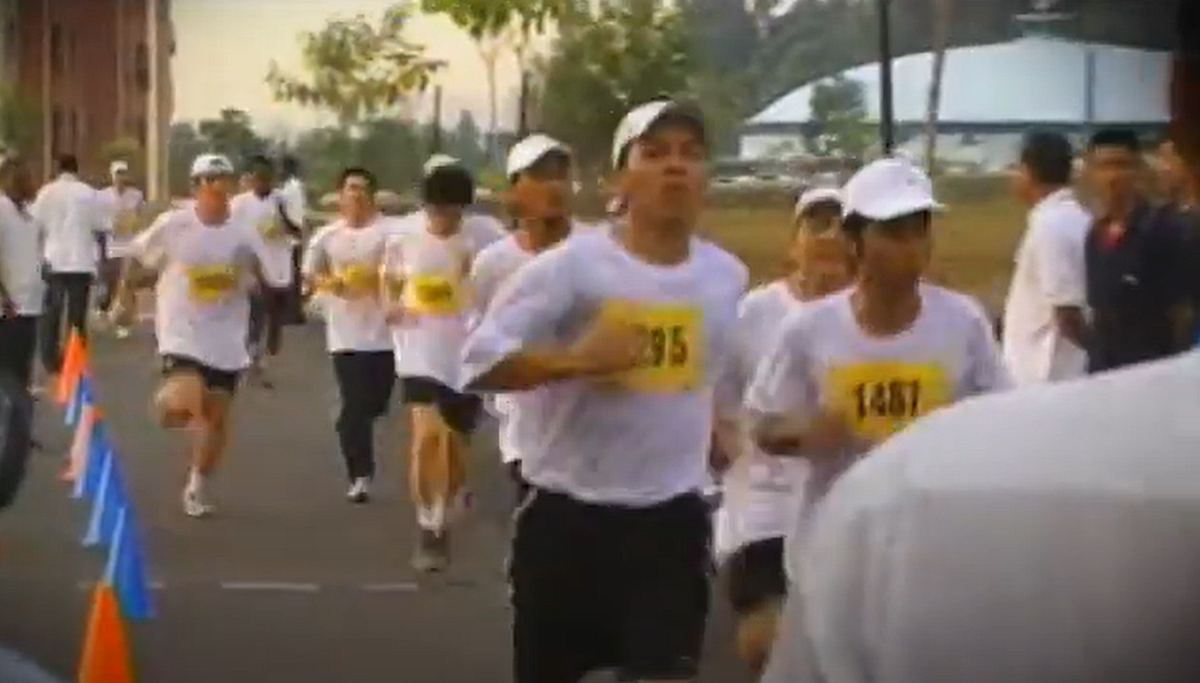
(Astronaut Run. Source: MOSTI)
From over 11,000 applicants, 894 were called up for the first physical test: a 3.5 km “Astronaut Run” held at the Royal Malaysian Air Force (RMAF) base in Subang. The rule was simple: finish within 20 minutes.
For many, this was the first true test of stamina and discipline. Yet the real trial began afterward. Candidates who finished the run were ordered to report to Serdang Hospital within two hours for further screening. Anyone who failed to make it on time was eliminated.
Aerospace Medical Test I: Serdang Screening
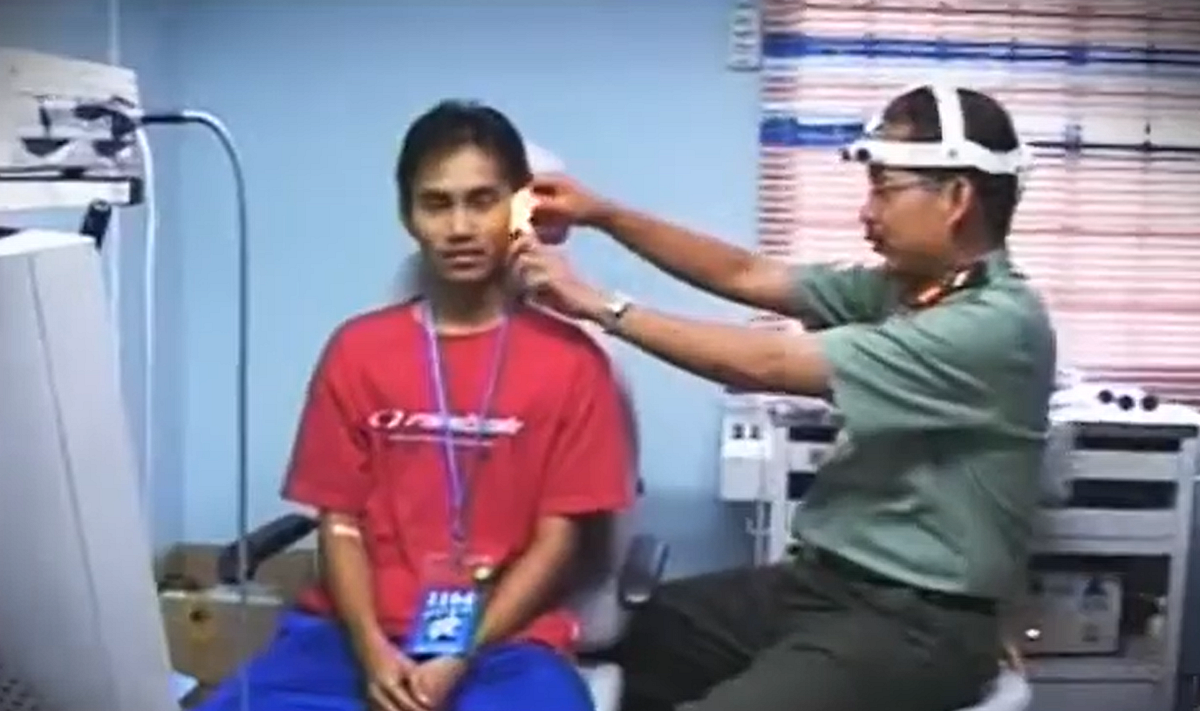
(General Health Screening at Serdang Hospital. Source: MOSTI)
At Serdang Hospital, about 200 candidates remained. They were first given a presentation on the uncompromising requirements: flawless physical and mental health, no history of eye problems, and strong cardiovascular condition.
The screening began with a dramatic elimination: when asked to step forward if they had ever worn glasses or undergone eye treatment, nearly half the hall rose, all were immediately cut.
The rest underwent the first aerospace medical test, a general health and physical examination. By the end of this stage, only 59 survivors remained.
Aerospace Medical Test II: Endurance Under Stress
A few weeks later, the 59 were recalled for more demanding evaluations, carried out with the RMAF Institute of Aviation Medicine (IAM).
- Centrifuge Test : At the IAM facility, candidates were strapped into a cockpit-like capsule and spun up to 5G. Their ability to remain conscious and composed under intense gravitational forces was measured.
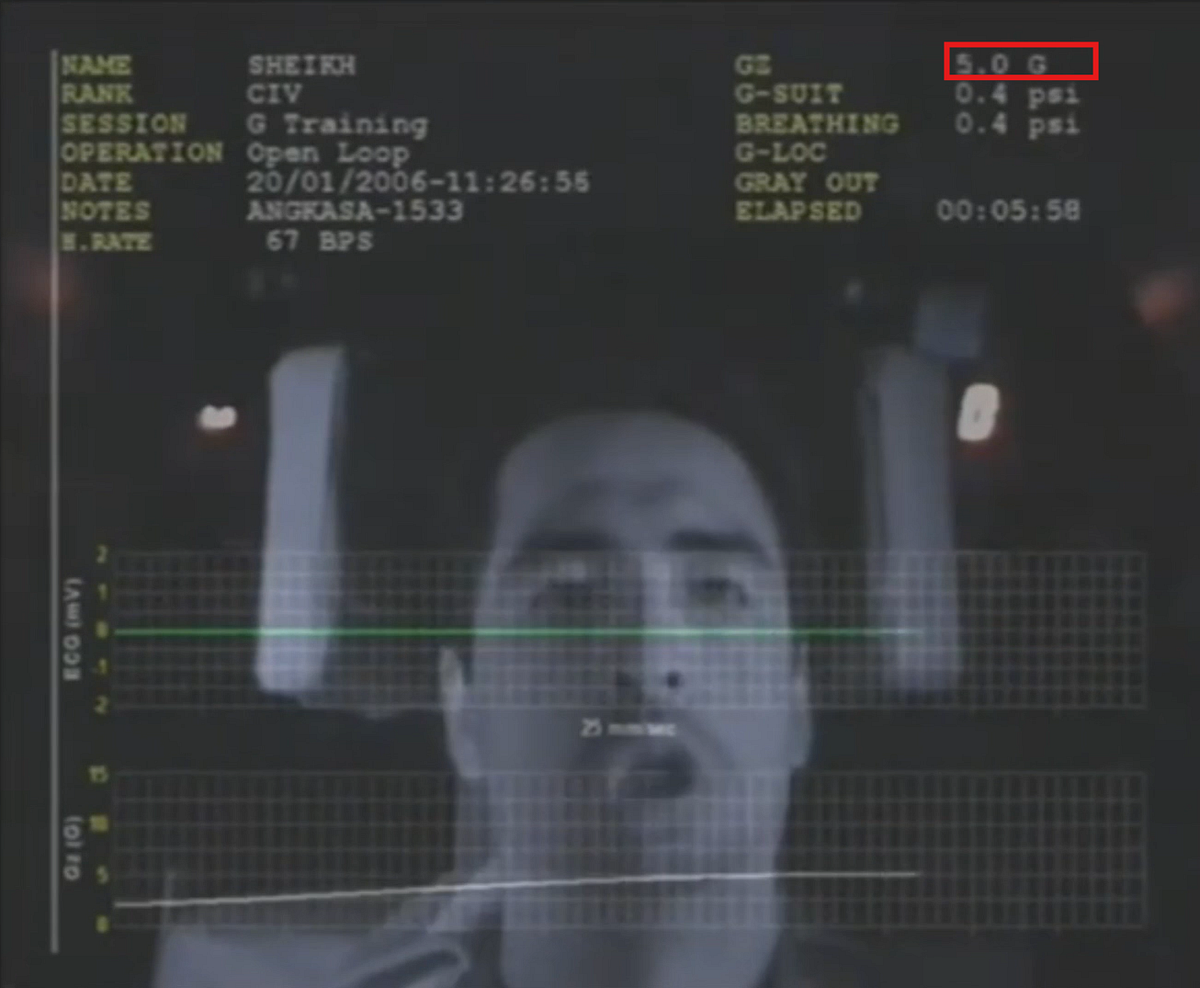
(Centrifuge test at IAM. Source: Youtube, Sheikh Muszaphar)
- Chamber Test : Inside a hypobaric chamber simulating 25,000 feet altitude, candidates wore oxygen gear while being asked questions. This tested cognitive sharpness under oxygen deprivation (hypoxia).
- Internal Medical Imaging : Cameras were used to inspect the spine, neck posture, and circulation. These are critical areas to determine whether they could withstand long periods in space suits.
By the end of this stage, the number was cut down to 18 candidates.
PASKAL Survival Training
The 18 finalists were then sent to the Royal Malaysian Navy base in Lumut, Perak, to train with the elite PASKAL commandos.
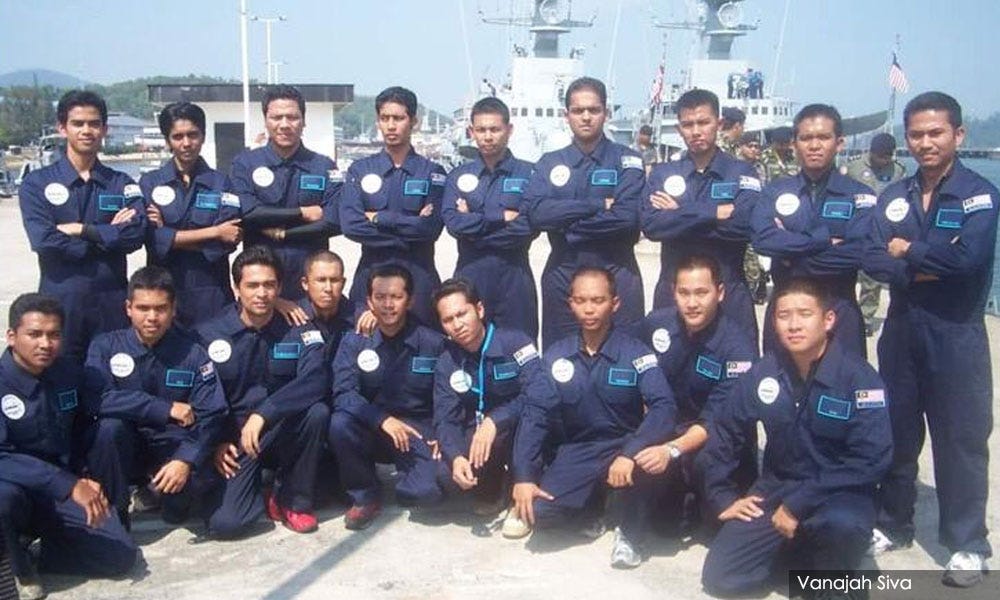
(Last 18 candidates. Source: Malaysia Kini)
The survival program included:
- Night ocean drills : floating for hours in cold seawater.
- Jungle training : trekking through dense rainforest with limited supplies.
- Team endurance : exercises designed to break down mental and physical resistance.
When it was over, just 8 finalists remained.
The Final Eight
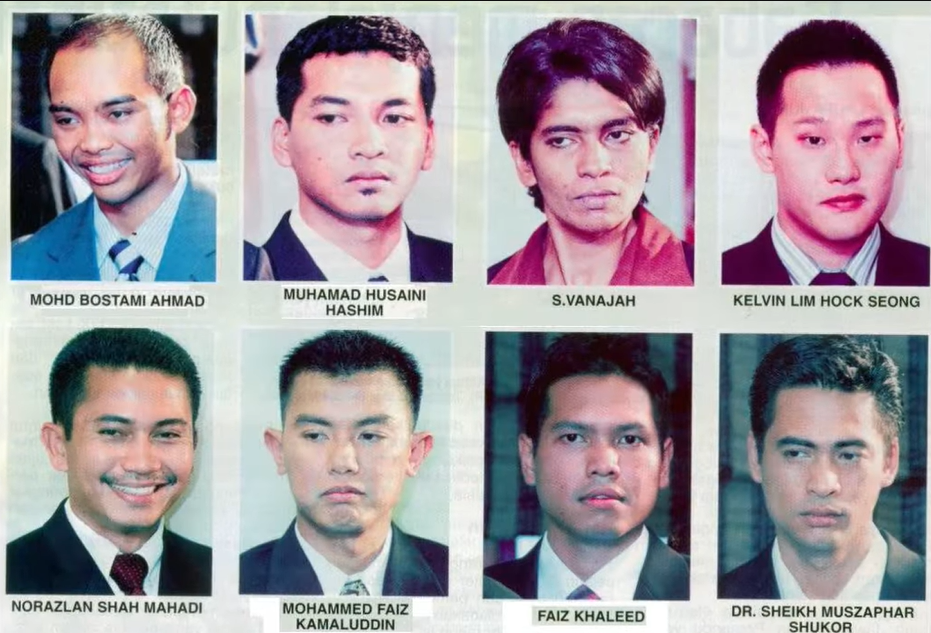
(The final eight candidates of Malaysia's Angkasawan program. Source: Youtube, Palataology)
A few weeks after the PASKAL tests, the candidates were summoned to meet Tan Sri Jamaluddin bin Dato’ Haji Mohd Jarjis, the Minister of Science, Technology and Innovation, who personally addressed them on the significance of the mission and officially introduced them to the media as the final eight candidates.
The next day, they faced formal interviews before a prestigious panel, including:
- Former Inspector-General of Police
- Chief of the Royal Malaysian Air Force
- Chairman of TNB
- Chairman of MMU
- Director of ANGKASA
The Last Four Standing
On 14 March 2006, at the launch of the G-Simulator Training Center (Pusat Penyelidikan dan Latihan Simulator-G, Pulls-G) at the RMAF base, Deputy Prime Minister Datuk Seri Najib Tun Abdul Razak formally announced the four Malaysian astronaut finalists:
- Dr. Faiz Khaleed, 26, an Armed Forces dentist.
- Dr. Sheikh Muszaphar Shukor, 34, a hospital medical officer.
- S. Vanajah, 35, an engineer (and only woman, only Indian finalist).
- Mohammed Faiz Kamaluddin, 34, a Malaysia Airlines pilot.
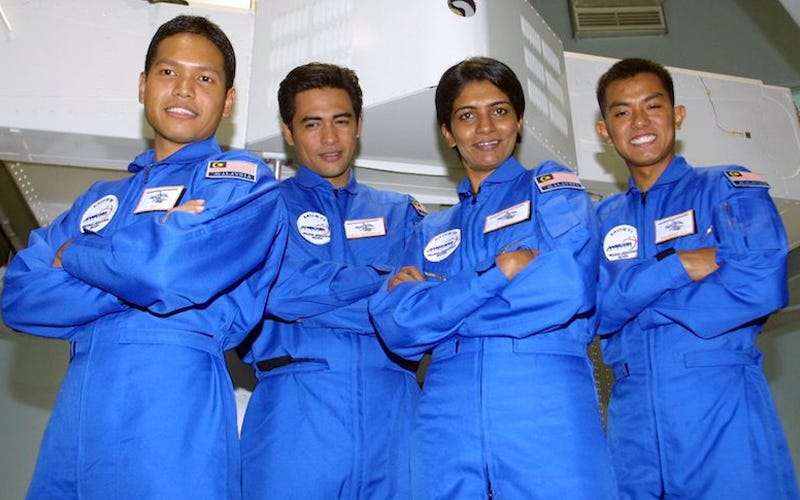
(From left, Dr. Faiz Khaleed, Dr. Sheikh Muszaphar Shukor, Dr. Vanajah and Faiz Kamaludin. Source: Free Malaysia Today)
Training in Russia: Star City
The four were sent to the Yuri Gagarin Cosmonaut Training Centre, Star City, Moscow for a month-long round of intensive tests, which included:
- Advanced medical and psychological evaluations
- Centrifuge trials up to 8G
- Stress and adaptability drills
By September 2006, Prime Minister Tun Abdullah Ahmad Badawi announced that Dr. Sheikh Muszaphar and Dr. Faiz Khaleed had been chosen as the final two candidates, with Vanajah and Capt. Faiz Kamaluddin eliminated.
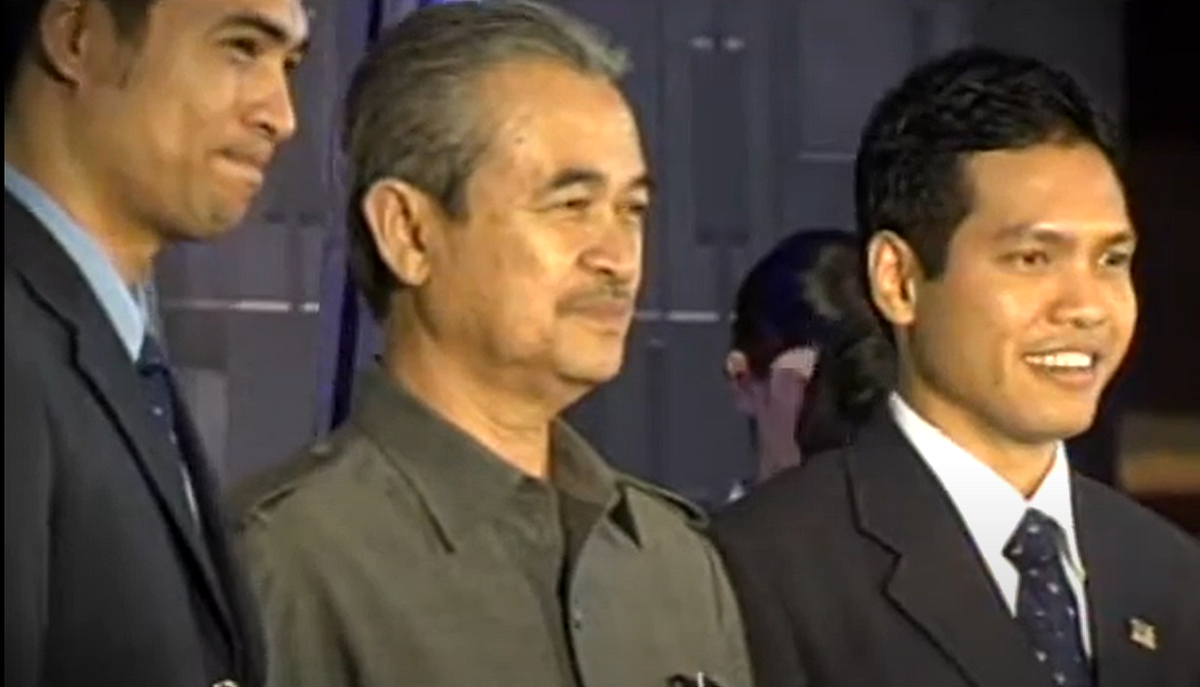
(Dr. Sheikh Muszaphar and Dr. Faiz Khaleed with Tun Abdullah Ahmad Badawi. Source: MOSTI)
Both began 18 months of full cosmonaut training, which covered:
- Russian language lessons
- Theoretical spaceflight and orbital mechanics
- Parabolic “zero gravity” flights
- Soyuz spacecraft emergency drills
- Survival training in Russian winter forests and open seas
- Aerodynamic and pressure chamber training
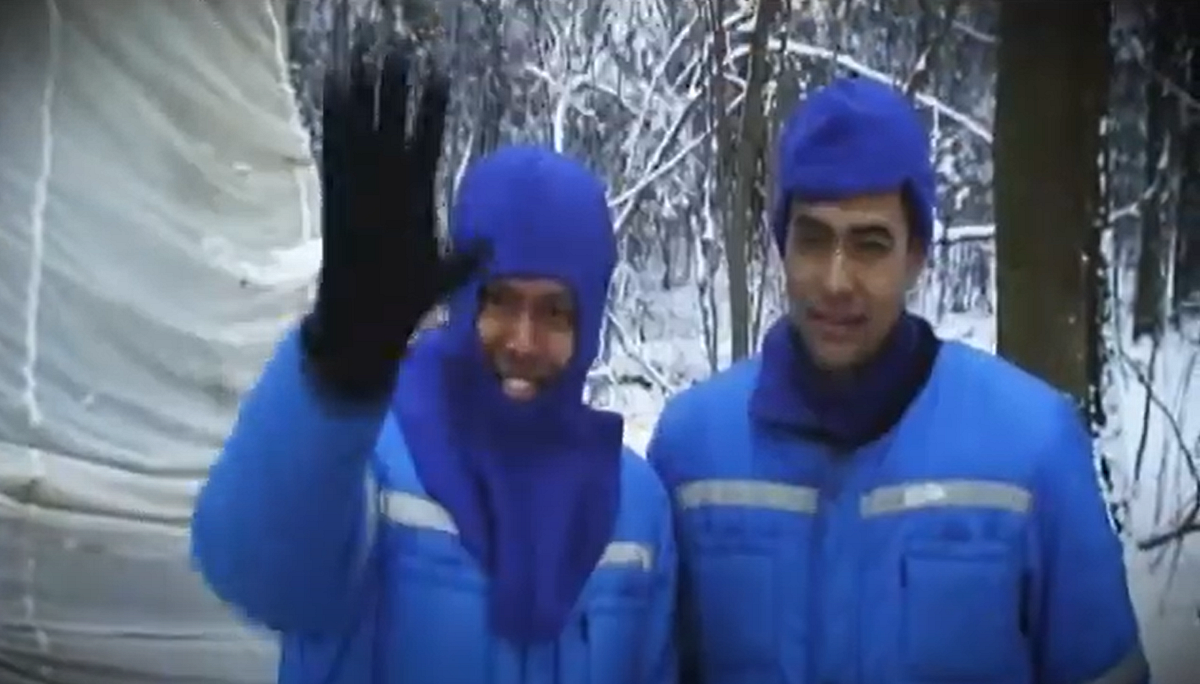
(Dr. Sheikh Muszaphar and Dr. Faiz Khaleed at Star City. Source: MOSTI)
The Chosen One (plus one)?
Although both men trained together, the final choice remained uncertain until July 2007, when Dr. Sheikh Muszaphar appeared with the Expedition 16 crew at a NASA press conference in Houston, with Dr. Faiz confirmed as backup.
On 17 September 2007, Prime Minister Abdullah confirmed that Dr. Sheikh Muszaphar would be Malaysia’s first astronaut, with Dr. Faiz remaining as reserve.
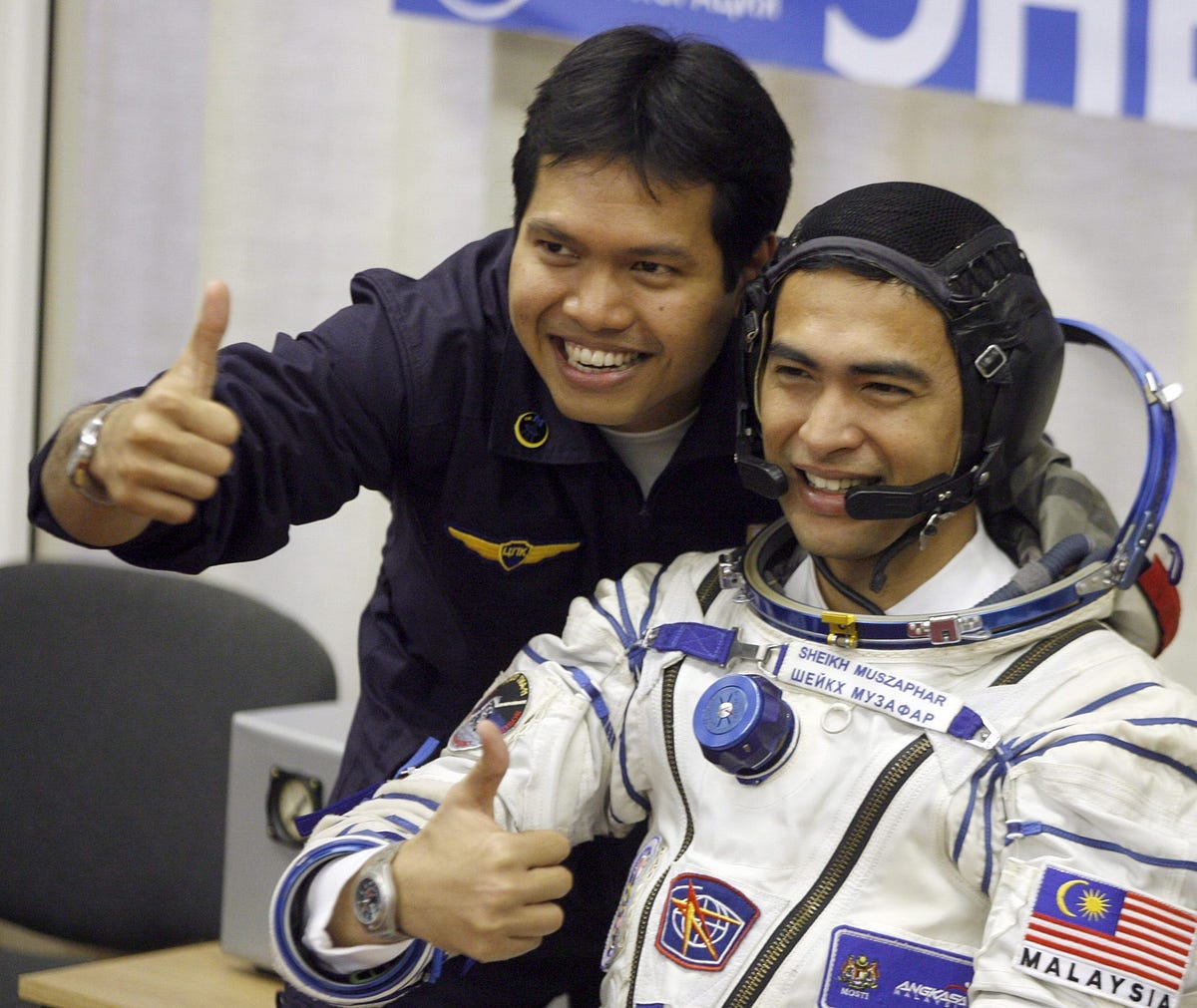
(Dr. Sheikh Muszaphar and Dr. Faiz Khaleed. Source: Utusan)
On 10 October 2007, Sheikh Muszaphar launched aboard Soyuz TMA-11 alongside NASA’s Peggy Whitson and Russia’s Yuri Malenchenko. He conducted biomedical and microgravity experiments during his 11-day mission.
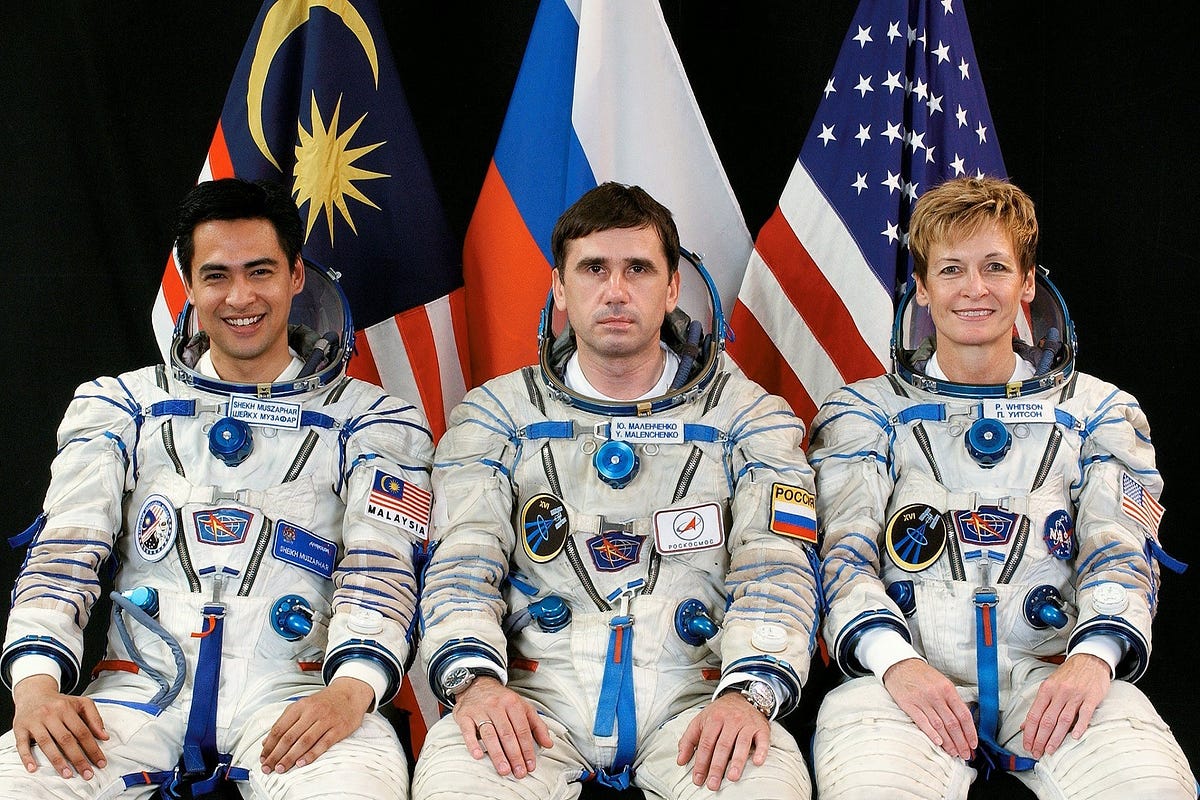
(Soyuz TMA-11 Crew photo. From left: Dr. Sheikh Muszaphar, Yuri Malenchenko and Peggy Whitson. Source: Spacefacts)
He returned to Earth on 21 October 2007 aboard Soyuz TMA-10, becoming Malaysia’s first angkasawan and cementing his place in national history.
Conclusion
From over 11,000 hopefuls, Malaysia’s astronaut program selected just one man. The process spanned four years, countless eliminations, survival training, medical stress tests, and international scrutiny.
The journey of Dr. Sheikh Muszaphar Shukor was not just about one individual’s triumph, but about Malaysia’s collective ambition to reach the stars. It was a story of resilience, discipline, and vision , and the beginning of Malaysia’s presence in space exploration.