When we imagine astronauts in orbit, we usually think of spacewalks, experiments, and stunning Earth views. But behind the science and the spectacle, astronauts still need to do the ordinary human things: eat, sleep, and use the bathroom. In microgravity, though, none of these tasks are ordinary, they all require creative solutions.
For this post, I didn’t just rely on articles or textbooks. I watched four YouTube videos where astronauts themselves (like Sunita Williams and Chris Hadfield) gave personal tours of the International Space Station and explained how they handle daily life. Everything you’ll read here comes straight from their demonstrations. If you’d like to see the real footage, you can find the links in the Sources section at the end.
Eating in Space 🍽️
On Earth, gravity keeps your food on your plate. In orbit, food would float away, so astronauts rely on special packaging. Many meals are vacuum-sealed or dehydrated, then rehydrated with hot water before eating (Meir, 2020).
Astronaut Suni Williams showed off the ISS “kitchen,” which is basically a pantry of pouches. It’s stocked with drinks, meats, vegetables, cereals, snacks, and even international meals from Russia and Japan. Crewmembers can also get favorites from home; Suni got marshmallow “fluff” sent up so she could make her beloved fluffer-nutters (Williams, 2012).
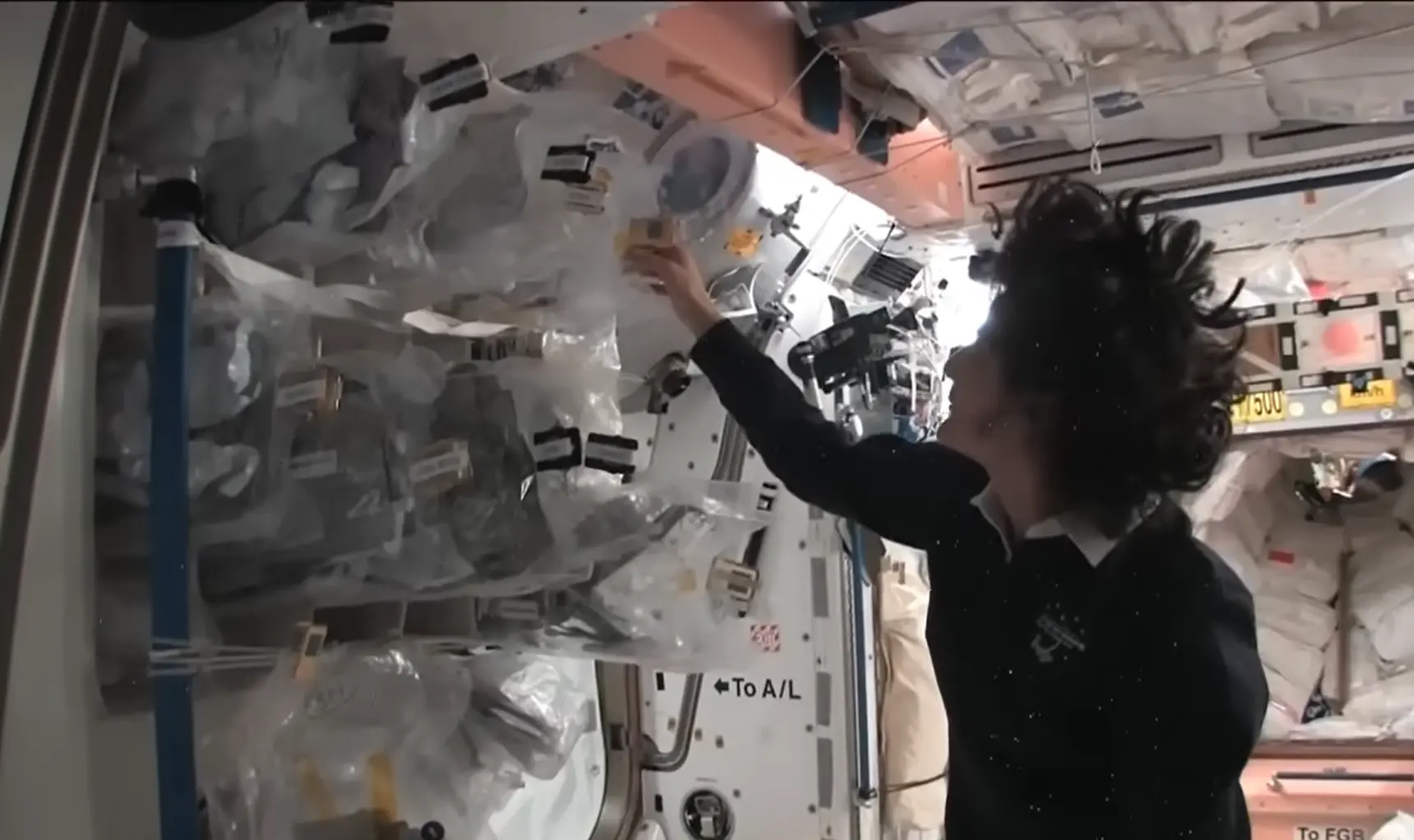
Sunita Williams showing the kitchen on the ISS
Tortillas replace bread (to avoid messy crumbs), and astronauts sometimes receive fresh fruit or candy from supply ships (Meir, 2020). So meals may not be gourmet, but they’re tasty and surprisingly varied.
Sleeping in Space 😴
Astronauts need solid rest after 12-hour workdays on the ISS. The station has six sleep stations; small, phone-booth-sized cabins with a sleeping bag, computer, and personal items. Williams calls them “pretty comfy,” like little bedrooms or offices (Williams, 2012).
Since there’s no gravity, astronauts don’t lie down; they float in a sleeping bag secured to the wall. Orientation doesn’t matter. Right side up, sideways, or even upside down, your body feels the same (Williams, 2012). Chris Hadfield explained that muscles completely relax, and pillows aren’t needed (Hadfield, 2013).
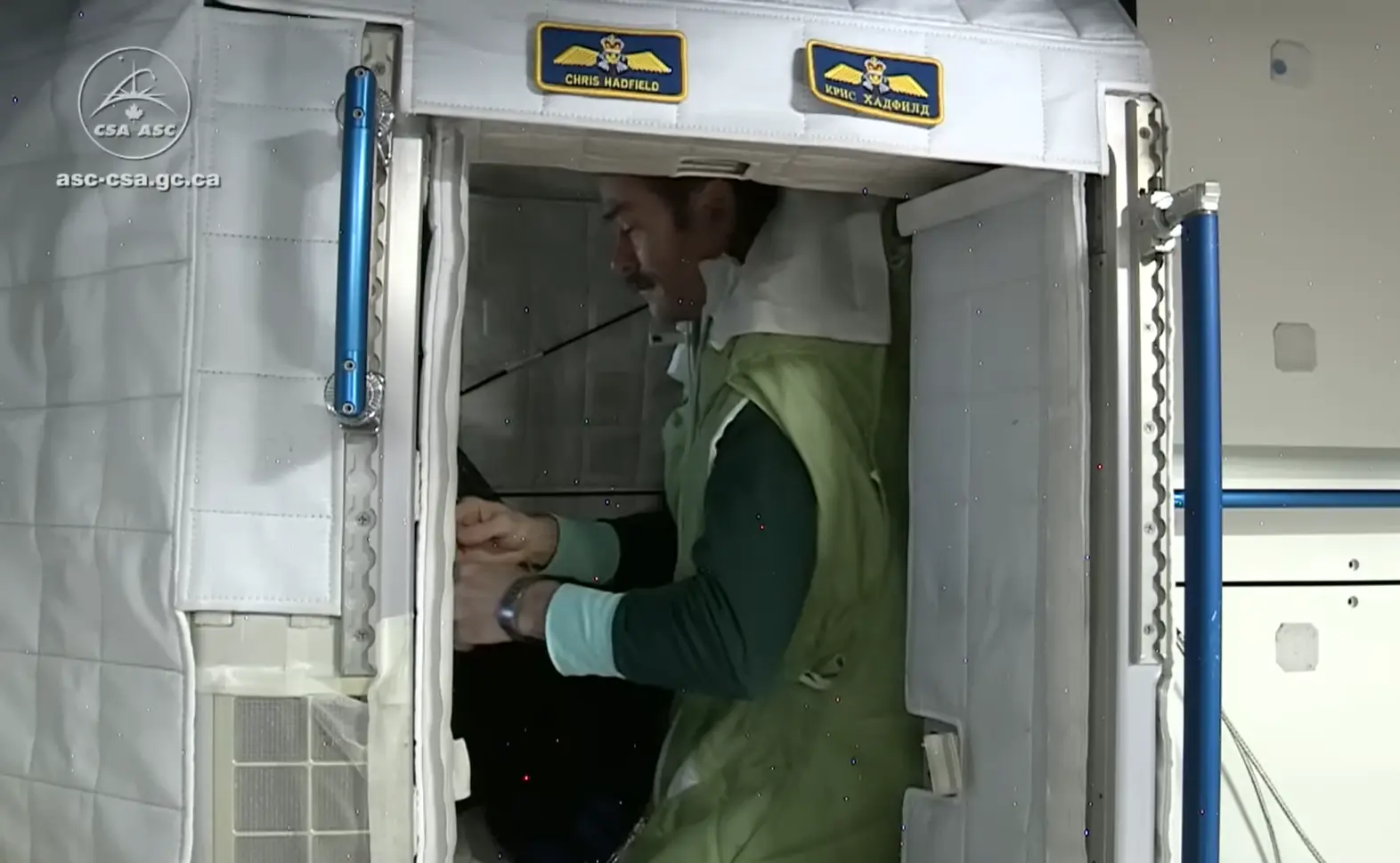
Chris Hadfield getting ready to sleep
To cope with 16 sunrises per “day,” many astronauts use eye masks or close shutters to block out constant light (Meir, 2020).
Brushing Your Teeth in Space 🪥
Morning routines also look different. Williams demonstrated that toothpaste sticks to the brush thanks to surface tension, and even water forms a floating bubble that clings to the bristles. After brushing, astronauts either swallow the toothpaste (like mouthwash) or spit it into a paper towel (Williams, 2012). Hair brushing is easy too, your hair just sticks up no matter what!
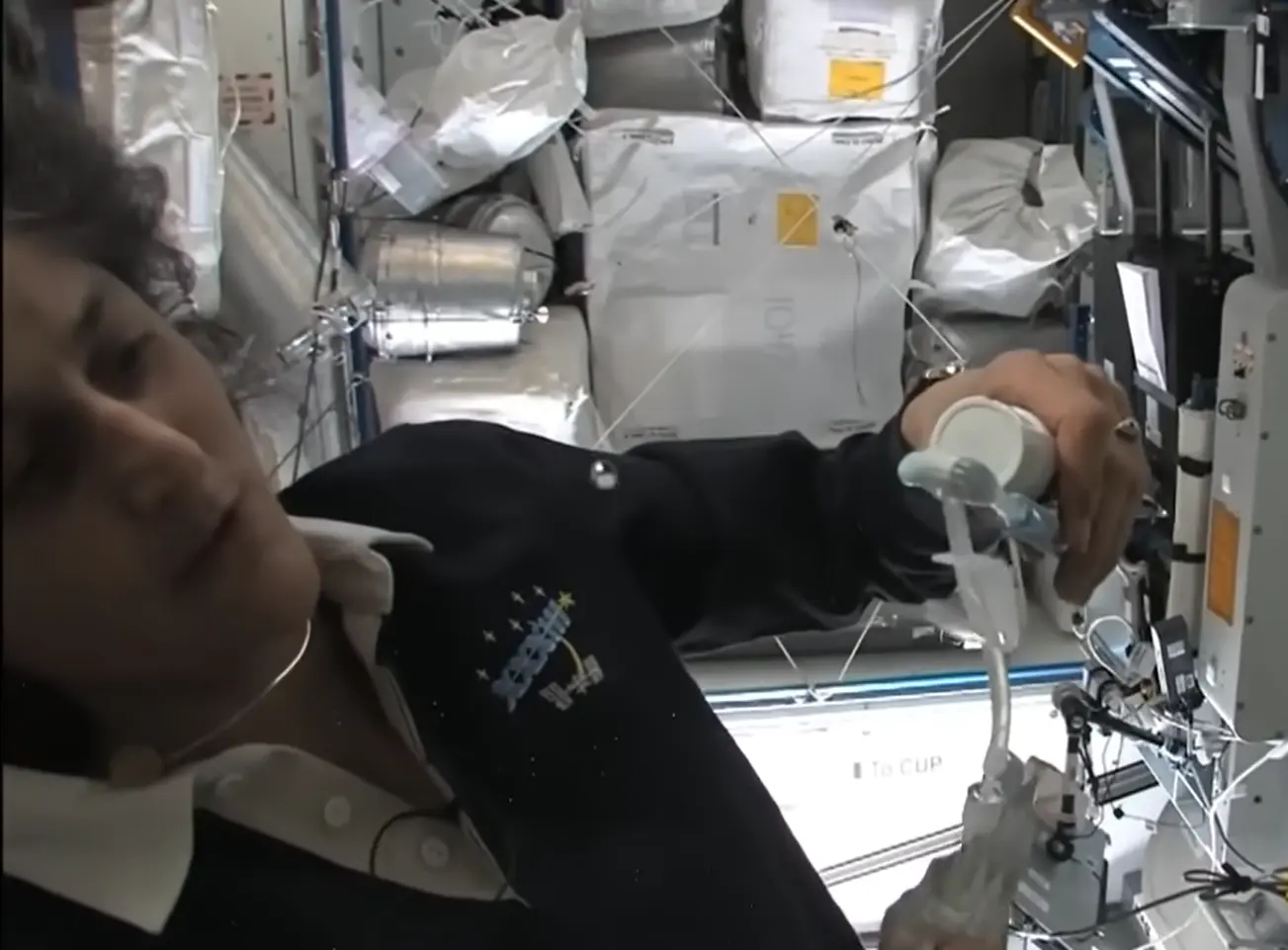
Sunita Williams putting a water bubble on the toothbrush
Going to the Bathroom in Space 🚽
This is everyone’s favorite question. On Earth, gravity helps everything fall where it should. In space, astronauts depend on airflow and suction (Cristoforetti, 2015).
For number one (urine): Astronauts use a funnel attached to a hose. The liquid is pulled into the system, filtered, and recycled into drinking water. As the crew jokes: “Today’s coffee is tomorrow’s coffee.”
For number two (solid waste): A small seat with a bag inside captures waste, which is stored and later incinerated when discarded cargo ships burn up in Earth’s atmosphere.
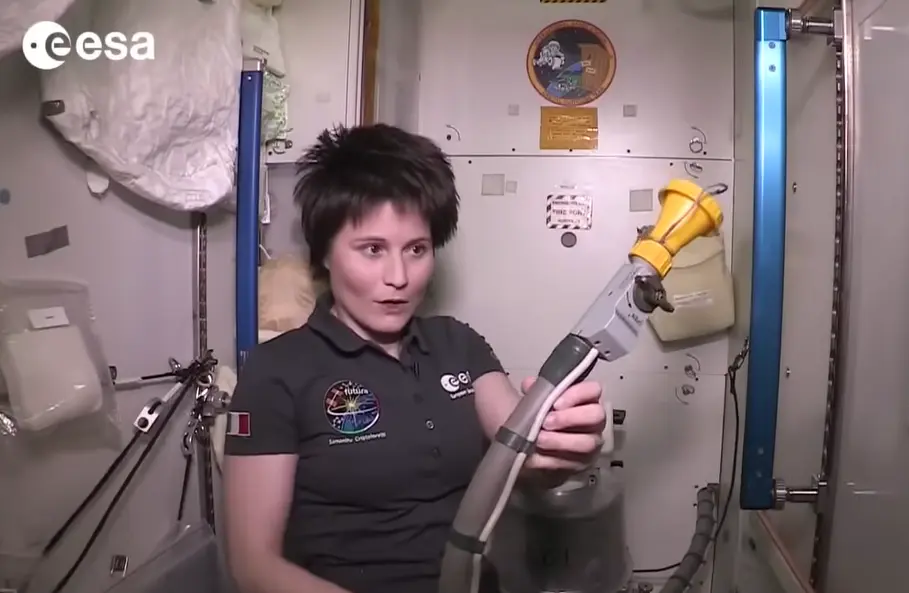
Samantha Cristoforetti explaining the suction tube for number one
Williams calls the ISS toilet “the throne.” It’s color-coded (yellow for #1) to avoid mistakes, and it uses suction to guide everything the right way. Still, astronauts wear gloves and use wipes or tissues just in case things “get out of control” (Williams, 2012).
NASA recently upgraded the design to better suit both men and women and prepare for future missions to the Moon and Mars (Meir, 2020).
Life’s Basics, Done Differently
From breakfast burritos to floating sleep pods to suction toilets, the daily routine on the ISS proves how adaptable humans are. Eating, sleeping, and bathroom breaks may seem ordinary on Earth - but in space, they become feats of science and engineering.
So the next time you look up at the night sky, remember: astronauts aren’t just conducting groundbreaking experiments. They’re also brushing their teeth with floating water bubbles, zipping into wall-mounted sleeping bags, and navigating one of the most high-tech bathrooms ever built.
Sources
- Williams, S. (2012). ISS Tour: Kitchen, Bedrooms & The Latrine. VideoFromSpace [https://www.youtube.com/watch?v=XkM_04Ch76E]
- Hadfield, C. (2013). Sleeping in Space. Canadian Space Agency [https://www.youtube.com/watch?v=UyFYgeE32f0].
- Cristoforetti S. (2015). Astronaut Shows How to Use a Space Toilet | ISS Video. CoconutScienceLab [http://youtube.com/watch?v=aCG8NPh5G5w]
- Meir, J. (2020). #AskNASA - How Do Astronauts Use the Potty in Space? NASA. [https://www.youtube.com/watch?v=u80H3FpTezA&t=23s]