In 2007, Malaysia made history when Dr. Sheikh Muszaphar Shukor blasted off to the International Space Station (ISS). It was more than a national milestone , it was a moment for the global Muslim community, exploring how faith can coexist with space exploration.
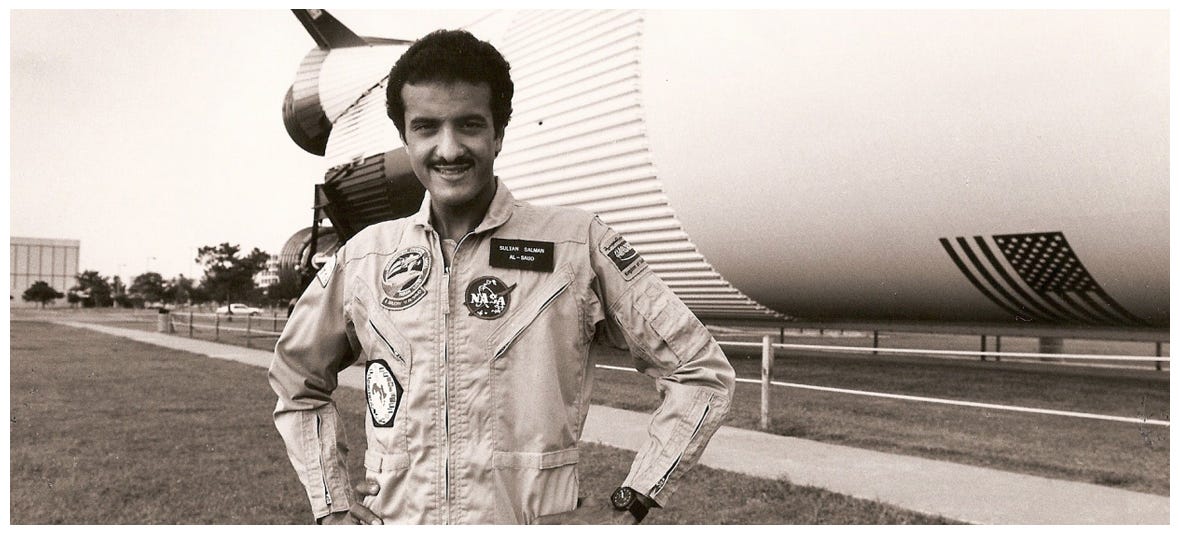
(Photograph of Prince Sultan bin Salman of Saudi Arabia. Source: MuslimMate)
Unlike earlier Muslim astronauts, Prince Sultan bin Salman of Saudi Arabia in 1985 or Anousheh Ansari, an Iranian-American space tourist, in 2006, who had to figure out religious obligations on their own, Malaysia took a meticulous approach.
The goal: ensure that Islam could be practiced even in orbit, without distracting from the mission.
Scholars and Scientists Come Together
To make this possible, over 150 Islamic scholars, scientists, and academics collaborated with JAKIM, Malaysia’s Islamic development agency. For months, they explored questions nobody had answered before:
- How to pray in zero gravity?
- How to face Mecca while orbiting Earth?
- How to fast during Ramadan?
- How to perform ablutions at the ISS?
The outcome was the Guidelines for Performing Islamic Rites at the ISS, an 18-page booklet detailing everything a Muslim astronaut needs to know. It has since been translated into multiple languages, paving the way for future Muslim travelers in space.
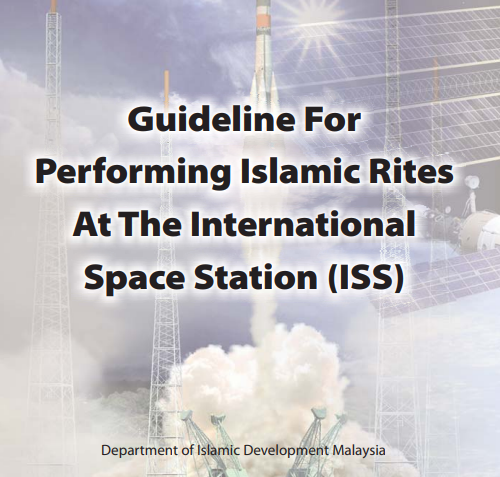
(Booklet cover, Guidelines for Performing Islamic Rites at the ISS. Source: JAKIM)
Praying in Orbit
Prayer posed unique challenges. The ISS completes an orbit in just 90 minutes, meaning that the station circles Earth 16 times a day. If every prayer were performed strictly according to Earth times, astronauts would need to pray up to 80 times in 24 hours (Originially 5 times a day).
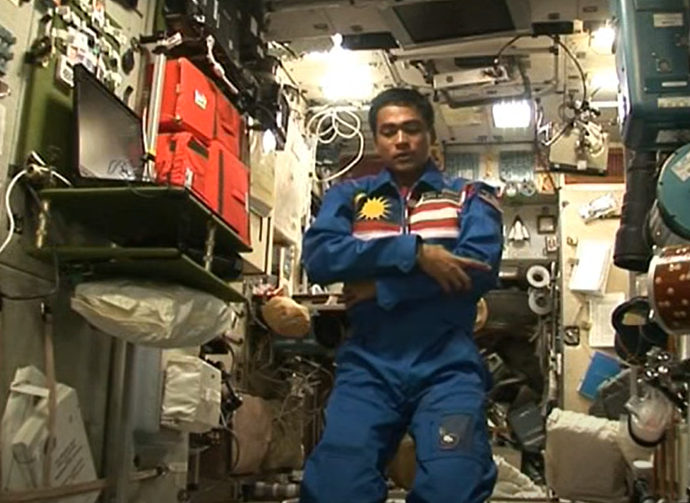
(Dr. Sheikh Muszaphar praying aboard the ISS. Source: YouTube, Sheikh Muszaphar)
The solution? Astronauts were advised to follow the prayer schedule of the launch site. For Dr. Sheikh Muszaphar, that meant Baikonur Cosmodrome in Kazakhstan.
Then there’s the matter of direction (qibla). The station moves at 27,577 km/h, constantly changing orientation. The scholars provided a hierarchy of options:
- Face the Kaabah; if not possible:
- Project its direction; if not possible:
- Face the Earth; if all else fails:
- Any direction with sincere intention.
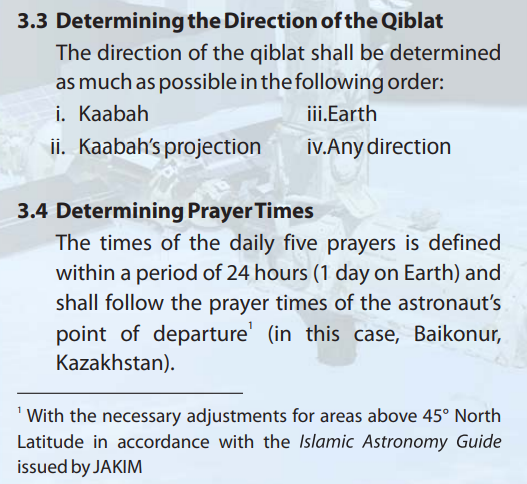
(Guidance on performing prayers in space. Source: JAKIM)
Zero gravity also meant traditional prayer postures - kneeling, bowing - were difficult. Astronauts could strap themselves to the spacecraft and perform prayers according to their abilities.
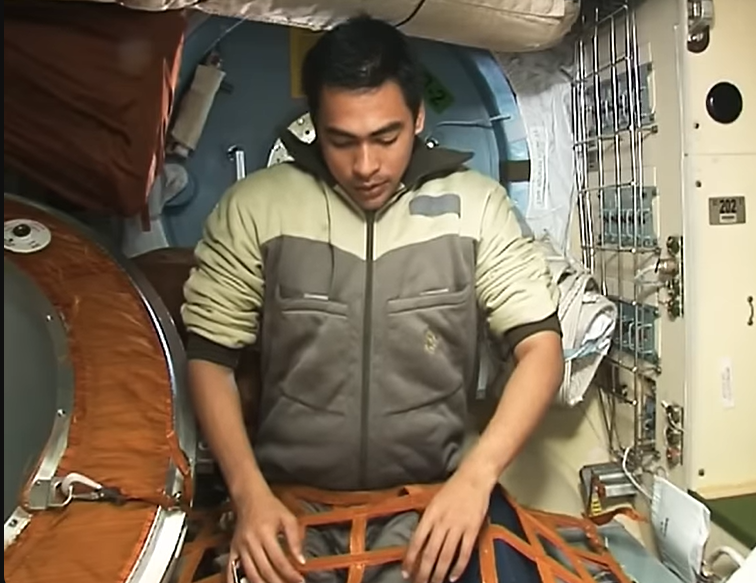
(Dr. Sheikh Muszaphar performing prayers strapped to the ISS. Source: Youtube, Sheikh Muszaphar)
Ablutions and Hygiene
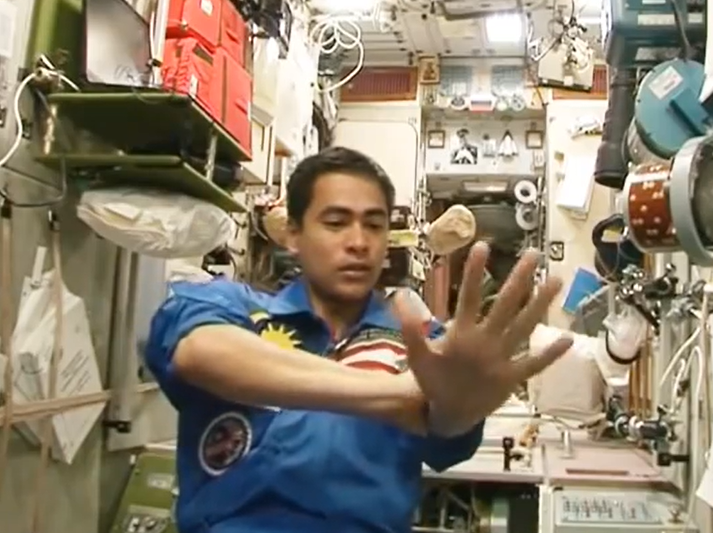
(Dr. Sheikh Muszaphar performing tayammum aboard the ISS. Source: Youtube, Sheikh Muszaphar )
Water scarcity in space meant alternative solutions for ritual purity. Tayammum (dry ablution) became standard, performed by wiping hands on a clean surface. For cleaning after using the restroom, wet wipes replaced running water. Even small adjustments like these allowed astronauts to remain compliant with Islamic law without compromising mission safety.
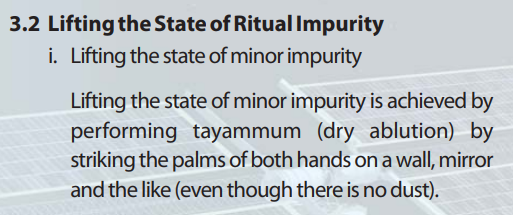
(Guidance on performing ablutions and maintaining ritual purity. Source: JAKIM)
Fasting in Ramadan
Dr. Sheikh Muszaphar’s mission coincided with Ramadan, adding another layer of complexity. Fasting in orbit isn’t straightforward: day and night cycles last only 90 minutes. Scholars allowed astronauts to:
- Follow the launch site’s time for fasting.
- Postpone fasting if health or mission safety required.
- Make up missed days later on Earth.
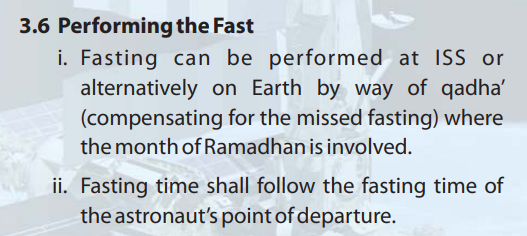
(Guidance from the JAKIM booklet on fasting for astronauts in space. Source: JAKIM)
This balance of devotion and practicality showed how Islam adapts to extreme circumstances while preserving spiritual integrity.
The Spiritual Significance
Beyond practical solutions, the mission held deep symbolic meaning. Being in space brought Dr. Sheikh Muszaphar closer to God’s creation, inspiring Malaysians and Muslims worldwide. The guidelines also demonstrated that faith does not limit scientific achievement ,instead, it can guide it responsibly.
Malaysia’s pioneering work set a precedent for Muslim astronauts, ensuring that faith can be practiced even beyond Earth. The guidelines continue to serve as a reference for astronauts, showing that religion and technology are not mutually exclusive , they can complement each other, even in the most extreme environments.
Whether on Earth, in orbit, or on a future mission to Mars, the message is clear: faith and science can journey together, guiding humans to explore, learn, and remain spiritually grounded.
References: